
Colorado Winery Wins Best of Show for Marquette
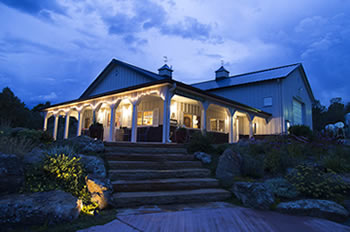
Fox Fire Farms Winery
Fox Fire Winery won both Best of Show and Triple Gold for their 2012 Marquette at the Colorado State Fair. The winery also received a silver medal for their Traminette. According to Richard Parry, the owner of the Ignacio (Durango), Colorado winery, these were the only two hybrids entered in the Colorado State Fair competition.
“Score one for cool climate viticulture and enology,” Parry said. “We beat out some big name California wineries like Gallo and Barefoot Cellars.”
Parry told the Pine River Times that growing grapes in Southwest Colorado is a challenge because of the high altitude, cold nights and bitter winter temperatures. However, his 1.5 acres of Marquette have proven durable. “The biggest challenge in my location is the spring frosts because Marquette has an early bud break,” he said. (Durango is in USDA hardiness zone 4b with temperatures that can go as low as -20F.)
In his eight acre vineyard, Parry also grows Corot Noir, Petite Pearl, Traminette, Brianna and Riesling. He is adding about an acre a year to the vineyard which provides fruit for Fox Fires’ estate grown wines.
As for Marquette wine making, Parry said there is no problem getting a high brix in the Marquette. In fact, too much sugar content in the grapes can sometimes be a challenge. “Our location in the Southwest Colorado mountains gives us plenty of summer sunshine and a dry climate too.”
Last year’s Marquette was harvested at 26 Brix so Parry “watered it back a little” to prevent the wine from being over 14% alcohol.
Amelioration (adding water to the must) also helps balance the acidity of Marquette, according to Parry. “Tartratable acidity for the Marquette has come in at around 10 both years,” Parry said.
An unanticipated problem is that the Colorado Marquette has a pH of around 3.90. Generally, the ideal pH for red wines is below 3.6. When the pH of wine is high, the wine can be difficult to bottle and store.
“I have been splitting the Marquette into two different batches at primary fermentation, using two different yeasts and then blending them back,” Parry said. He also puts Marquette through malolactic fermentation.


Thank you for this article. I have 4 gallons of Marquette in the secondary fermentation now. I used K-116 yeast. I have 3.4 PH and .8 acidity. It is fruity enough that I am considering amelioration and malolactic fermentation. I am in SE SD. It has been a very wet humid year. 2018.