
My Middle West
One of the best paragraphs in the Great Gatsby is about the Midwest:
“That’s my middle-west- not the wheat or the prairies or the lost Swede towns but the thrilling, returning trains of my youth and the street lamps and the sleigh bells in the frosty dark and the shadows of holly wreaths thrown by lighted windows in the snow. I am part of that, a little solemn with the feel of those long winters….”
F. Scott Fitzgerald, The Great Gatsby
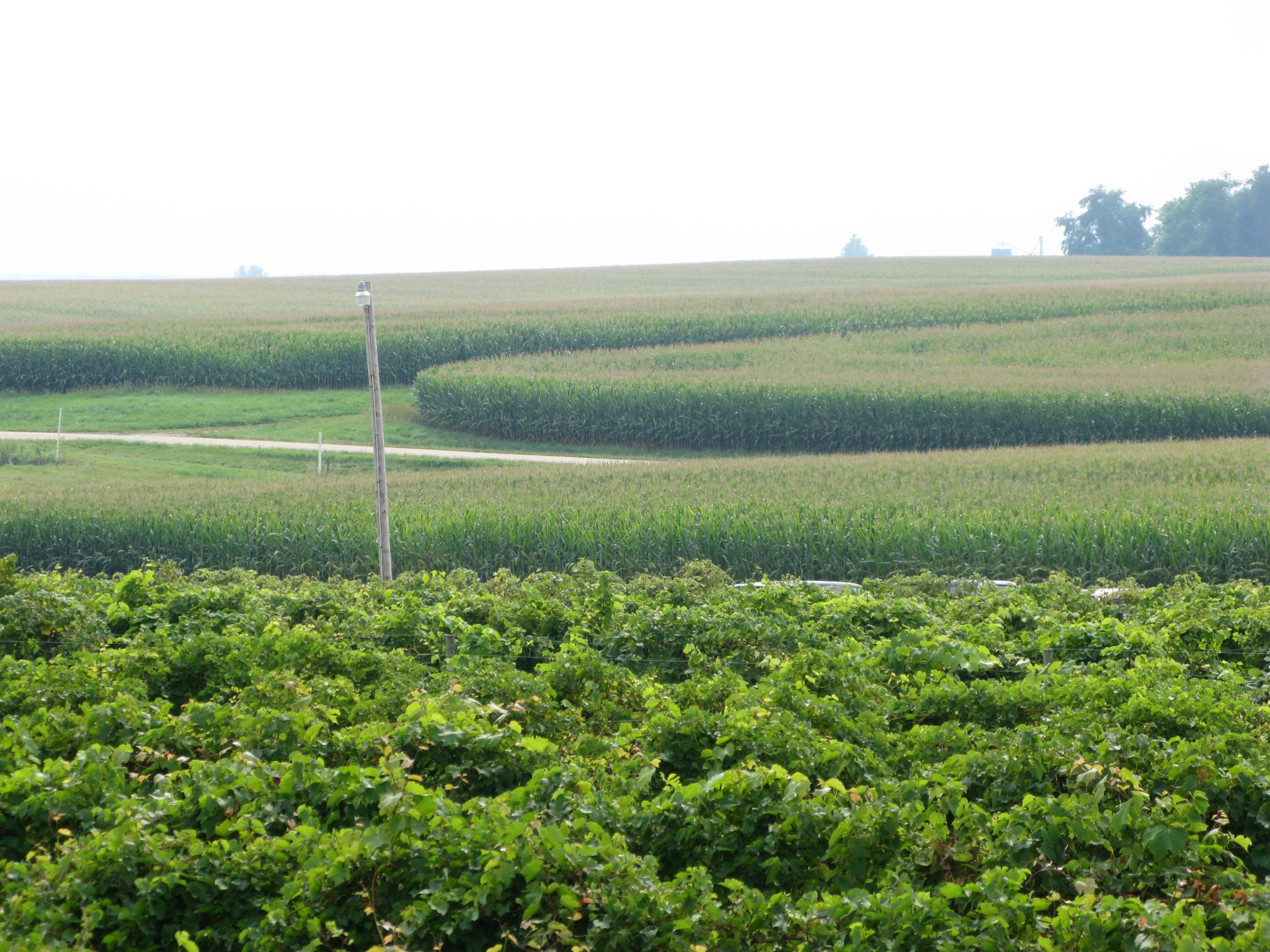
Grapes give way to corn at Mackinaw Valley Vineyard in Mackinaw, Illinois
The Midwest does not receive much romantic treatment in literature. But the winter landscape Fitzgerald describes is relatable to any Midwesterner.
There is something primal about the Midwest during winter. The long shadows, the stillness at dusk, the rustling of dormant grass and the few remaining dead leaves. Every Midwesterner can picture a solitary lit window in the distance during the long twilight of December.
Like most Fitzgerald, there is sense of movement and restlessness in the paragraph from Gatsby. The thought of escaping to someplace “better,” or at least warmer, gets many of us through the winter. The distant sound of trains, planes and highways seems to beckon during the dark months.
The passage about the Midwest is spoken by Nick Caraway towards the end of Gatsby, when the East Coast has lost its allure for him. Ambitious Midwesterners, like Nick, have always been drawn towards the coasts. To “make it” professionally often means going to New York or California.
But there is also a deep sense of nostalgia for the Midwest. Caraway finds New York immoral and he decides to flee Gatsby’s crazy dream and return to Minnesota.
How many people do you know who have left the Midwest only to return after a few years? The reason for returning is usually, “I missed the seasons.”
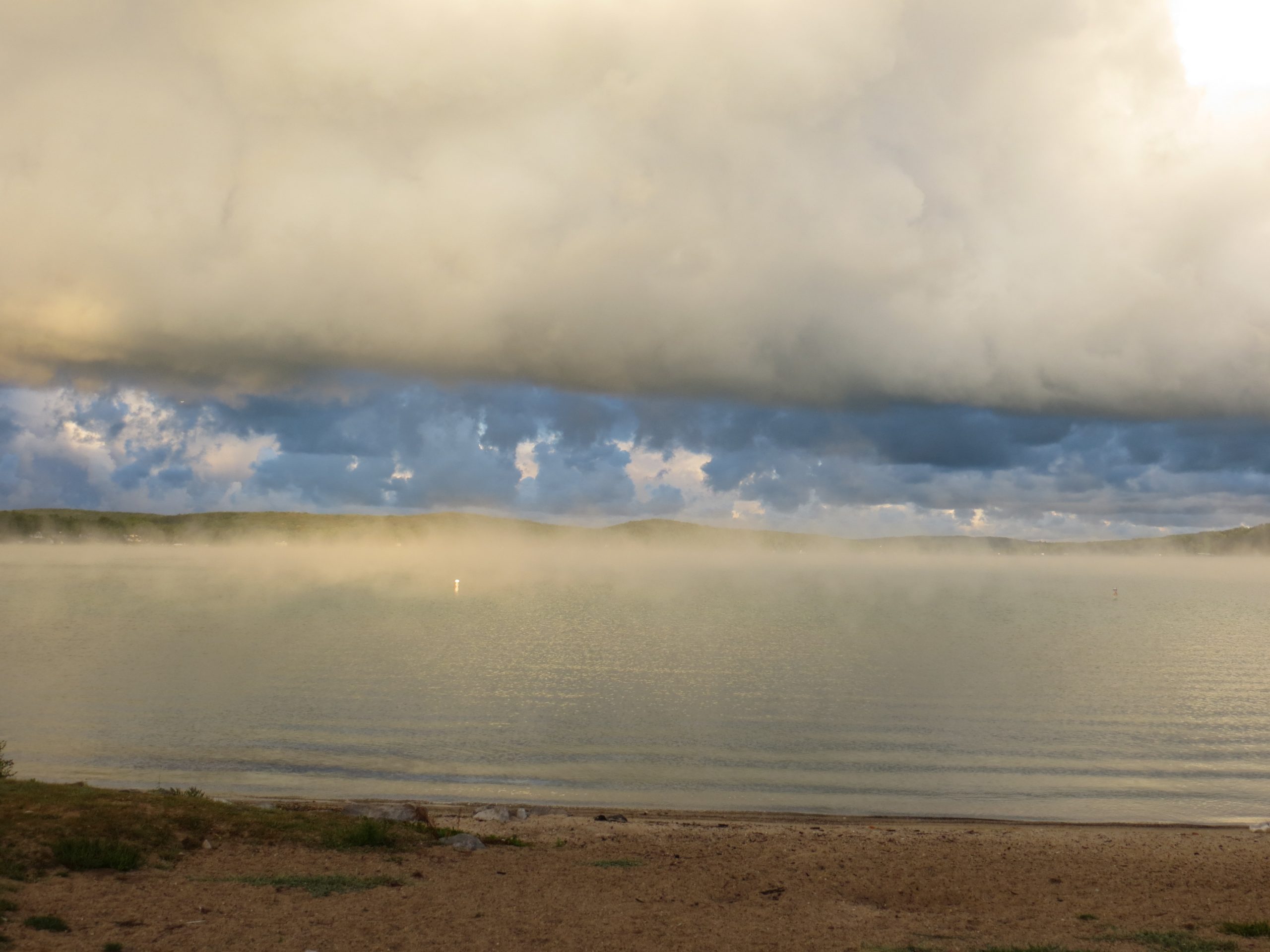
A September sunrise at Waloon Lake near Petoskey, Michigan
In the Midwest, our sense of time is tied to deciduous plants. Living in a vast mix of farm, forest and prairie makes one appreciate the cycles of plants and their resilience. On December 21st, the days will start to get longer. By late March, the days will be longer than the nights and the plants will begin to stir beneath the earth.
Yes, it’s dreadfully dreary here in the winter, but Nick knows the “thrilling returning trains” are always in the process of coming back. Spring is always just around the corner.
There is also a simple beauty to the landscape of the Midwest. With no mountain peaks, vast canyons or soaring waterfalls, one learns to see and appreciate finer details:
Once, while driving across central Iowa, I saw the moon rise as a sphere. At first, the sight was shocking. I thought the moon was about to collide with the earth.
On more than one occasion, it would not have been a surprise to see a mastodon emerge from the woods during a Lake Michigan snow squall. The Great Lakes during winter make one appreciate geologic time. We are not that far removed from the last Ice Age.
There are days during June when the vegetation is blooming so vigorously that the growth is almost perceptible in real time. The sounds plants emit when photosynthesis is going full tilt may not be audible, but you can still hear it.
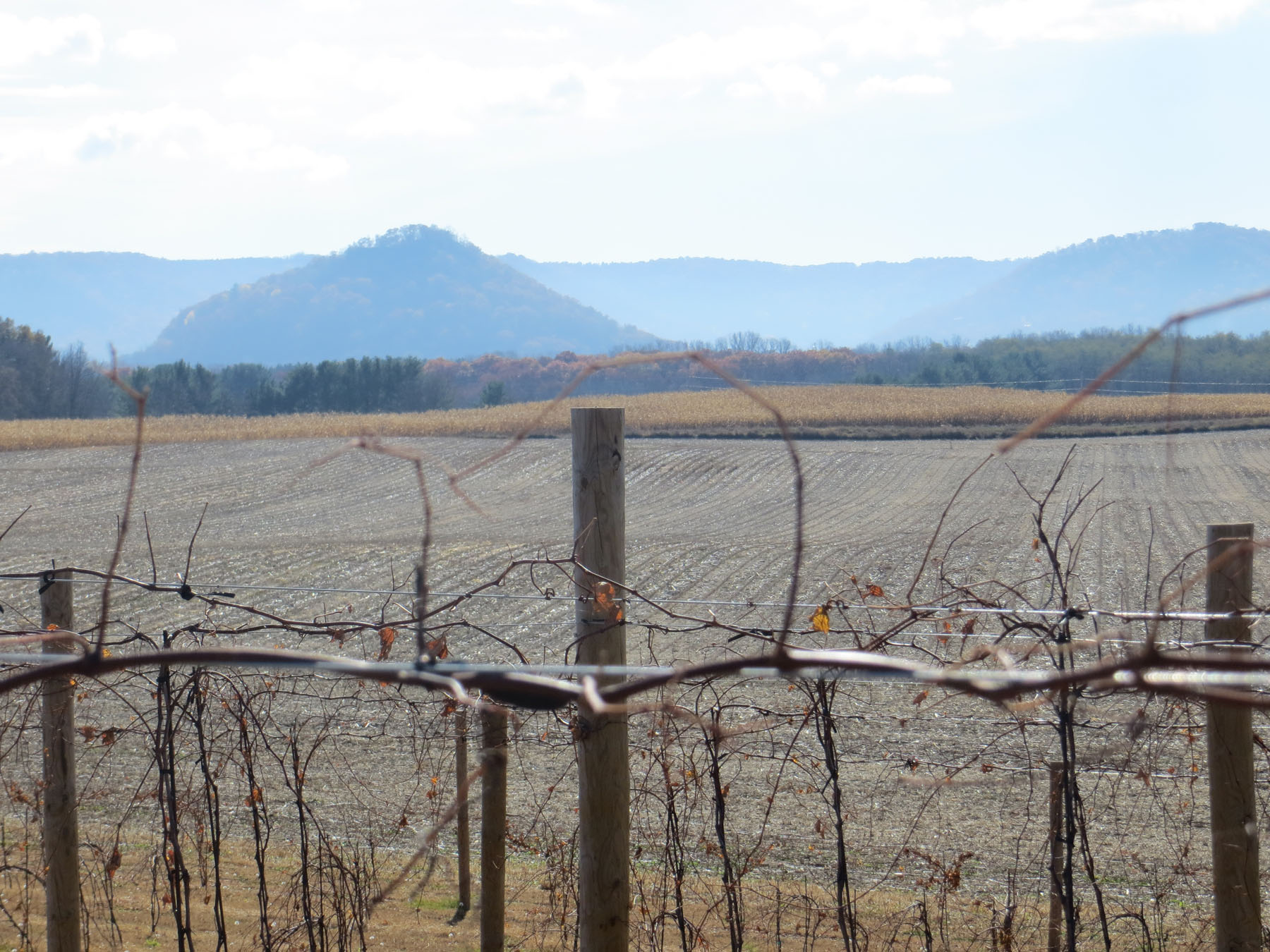
Elmaro Vineyard in Trempealeau, WI with the bluffs of the Mississippi River in the background.
The best Midwest wines are an expression of the subtle complexity of our region. We’re not showy or flashy, but there is a lot of substance just below the surface. To appreciate the Midwest and Midwest wine requires letting go of comparisons with other places. Like Nick says later in Gatsby, “perhaps we possessed some deficiency …which made us subtly unadaptable to Eastern life.”
In reality, there’s no need to be like someplace else. That’s my Middle West. What’s yours?
Mark Ganchiff is publisher of Midwest Wine Press.



What is it about winter that brings out wonderful writing from the heart! Loved the article about my home, the middle west. As a born easterner, I felt like I was coming home when I first moved here for school in Ann Arbor years ago and all the places I moved to afterwards were just stops on the way back until I returned from all my migrations to finally nest in the great state of Michigan and raise my daughter here. Gray and dreary- not to me! The subtle colors speak to my heart and I have never seen such raw beauty as a leafless oak against an angry storm sky or listened to the sound of a frozen lake at night groaning or the smell of snow in the green light of dawn. The cessation of all appearances of life brings time for reflection and the ability however fleeting to actually live in the moment. I crave it everyday !
Thanks Susan,
Part of that story was inspired by a snowy, late April visit to your vineyard, there’s a raw beauty to the Upper Midwest.
Mark G.